Mastering Buoyancy and Positioning in Diving
- -->> 4. Mastering Buoyancy and Positioning in Diving
What you'll learn
 Buoyancy Control FundamentalsOptimal Diving TrimAdvanced Propulsion TechniquesEnvironmental Awareness Underwater
Mastering buoyancy and positioning is not merely an advanced skill for divers; it is a fundamental aspect that transforms a good diver into an exemplary one. It’s the cornerstone of responsible underwater exploration, allowing divers to move through the aquatic realm with grace and precision. This crucial ability ensures the safety of both the diver and the delicate marine environment, minimizing disturbance to fragile ecosystems and preventing the stirring up of sediment that can obscure visibility for everyone. Developing these skills enhances every dive, making it more comfortable, more efficient, and ultimately, more respectful of the underwater world.
The Essence of Buoyancy Control
At its heart, buoyancy control is about achieving and maintaining neutral buoyancy, a state where a diver neither sinks nor floats. This delicate balance is primarily managed through breath control and the careful adjustment of air in the BCD (Buoyancy Control Device). Fine-tuning your breathing allows for subtle changes in depth; a full breath makes you slightly more buoyant, while an exhale makes you slightly less. This constant, conscious interaction with your lungs and BCD is what keeps you suspended effortlessly in the water column.
Proper weighting is also critical. Too much weight forces you to add more air to your BCD, making you bulky and less streamlined. Too little weight makes it difficult to descend and maintain depth at the end of a dive. Finding your optimal weight allows for minimal BCD inflation and easier, more natural buoyancy adjustments.
Achieving Perfect Trim
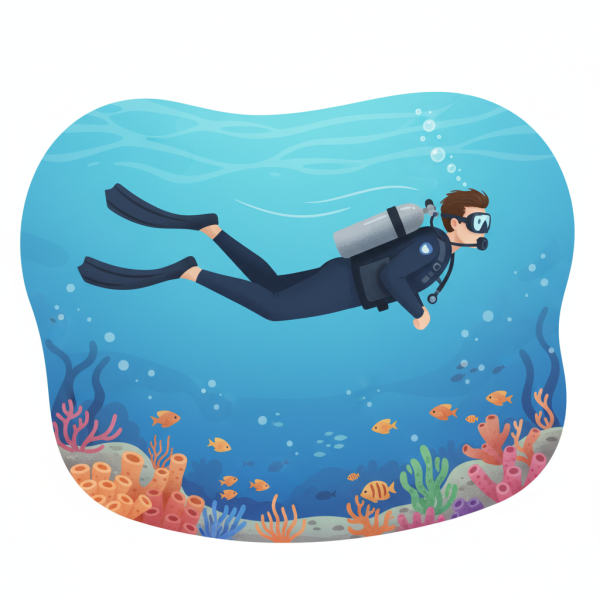
Beyond simply being neutrally buoyant, achieving perfect trim means orienting your body horizontally in the water, like an airplane in flight. This streamlined position reduces drag, conserves air, and allows for efficient propulsion. Good trim prevents your legs from dangling below you, which can kick up sediment or accidentally impact coral and other marine life.
- Weight Distribution: Distribute your weights evenly across your body, often on a weight belt or integrated into your BCD. Some divers prefer V-weights or trim weights on their tank straps to balance the weight of the tank.
- Equipment Configuration: Ensure all your gear, such as gauges and alternate air sources, is tucked away and streamlined. Hoses should be routed close to your body, not dangling freely.
- Body Posture: Practice holding your head straight, looking slightly forward, and keeping your knees bent at approximately 90 degrees with your fins flat, ready to kick.
Propulsion Techniques for Precision
Effective finning techniques are vital for maintaining good positioning without causing environmental harm. Traditional flutter kicks, while effective for covering distance, can be powerful and often disturb the bottom or send blasts of water towards sensitive organisms. Developing alternative finning styles allows for more subtle and controlled movement.
- Frog Kick: This powerful yet gentle kick involves drawing your knees up, pushing your fins out and then circling them back together, much like a frog. It propels you forward with minimal downward thrust, making it ideal for navigating close to the bottom or fragile areas without stirring up sediment.
- Modified Flutter Kick: If using a flutter kick, keep your legs higher and shorten the amplitude of the kick to reduce disturbance. Focus on moving water backwards, not downwards.
- Helicopter Turn: An advanced technique that allows you to rotate 360 degrees in place without using your hands or kicking excessively. It involves a subtle sculling motion with your fins, turning one fin inward and the other outward simultaneously.
- Back Kick: Useful for reversing direction or backing away from an object without turning around. It is essentially a reverse frog kick.
Mastering Positioning and Awareness
Constant awareness of your surroundings and your body's position is paramount. This skill prevents accidental contact with the reef, marine creatures, or even other divers. It's about being proactive, not reactive, in your movements.
Before moving, take a moment to scan your immediate environment. Look behind you, below you, and to your sides to ensure your path is clear. Practice slow, deliberate movements. Rushing often leads to mistakes and unintended disturbances. Imagine you are swimming through a delicate glass sculpture garden.
Utilize visual references to maintain your depth and distance. Observe stationary objects, the sand ripples, or the surface to gauge your movement. Avoid relying solely on instruments, as they can sometimes lag behind your actual position.
Summary
Mastering buoyancy and positioning is a continuous journey that enhances every aspect of your diving. By focusing on precise weighting, breath control, achieving perfect horizontal trim, and employing environmentally friendly propulsion techniques like the frog kick, divers can move through the underwater world with unparalleled grace. Developing acute spatial awareness and practicing deliberate movements ensures minimal impact on marine life and delicate ecosystems, leading to safer, more enjoyable, and truly responsible diving experiences for everyone. These fundamental skills are honed through practice, patience, and a deep respect for the ocean.
Comprehension questions
 What are the two primary methods divers use to manage their buoyancy underwater?Why is achieving 'perfect trim' important for a diver, beyond just being neutrally buoyant?Name two alternative finning techniques discussed in the article that help minimize sediment disturbance.What is the key principle for divers to practice to avoid accidental contact with marine life or the reef?
Review Quiz
Next Lesson

Course Contents : Underwater Photography Deep Dive
- >> 4.
 Mastering Buoyancy and Positioning in Diving