
An Introduction to Competitive Lumberjack Sports
What you'll learn
 History of Lumberjack SportsCompetitive Log RollingAxe Throwing TechniquesHot Saw Racing Excitement
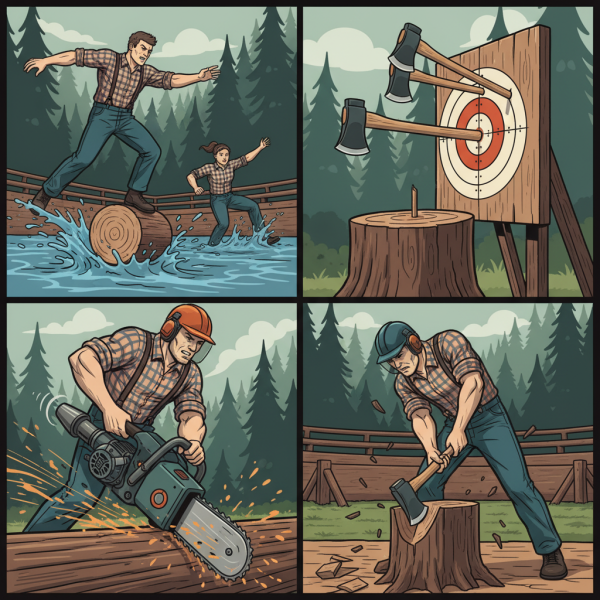
Welcome to the exhilarating world of lumberjack sports, where raw power, precision, and age-old skills collide in thrilling competition. Far from being mere demonstrations of strength, these disciplines have evolved into a sophisticated circuit of athletic events, drawing competitors from around the globe. This article will introduce you to the core competitive log rolling, axe throwing, and the incredibly fast “hot saw” racing, offering a glimpse into the history, techniques, and sheer dedication required to master these timber-focused challenges.
The Origins of Lumberjack Sports
Lumberjack sports trace their roots directly back to the logging camps of North America and Europe. Loggers, often isolated for months, would naturally turn their daily tasks into friendly competitions to pass the time and hone their skills. These impromptu contests, born out of necessity and camaraderie, laid the groundwork for the structured, high-stakes events we see today. The transition from practical work to professional sport highlights the enduring appeal of these fundamental human interactions with nature and tools.
Log Rolling: A Dance on Water
Competitive log rolling, also known as boomrunning, is a fascinating blend of balance, agility, and strategy. Two competitors stand on a floating log, attempting to spin it with their feet in a way that causes their opponent to lose balance and fall into the water. The logs, typically cedar or white pine, are specifically chosen for their buoyancy and uniform shape.
Success in log rolling demands more than just quick feet; it requires an acute awareness of an opponent's movements, the ability to anticipate their spins, and a strong core. Competitors employ various techniques, from fast, continuous spins to deceptive pauses, aiming to disrupt their opponent's footing. It's a sport that combines the grace of a dancer with the toughness of an athlete, often decided by split-second decisions and impeccable coordination.
Axe Throwing: Precision and Power
Axe throwing has surged in popularity, moving from competitive timber sports circuits to urban entertainment venues. In its competitive form, athletes hurl axes at a bullseye target from a set distance. The objective is to hit the target as close to the center as possible, demonstrating both strength and remarkable accuracy.
Competitors typically use various types of axes, ranging from small hatchets to larger, balanced throwing axes. Technique is paramount; a consistent grip, a smooth release, and the correct rotation are crucial for the axe to stick firmly in the target. Different leagues and competitions have varying rules regarding axe types and target scoring, but the fundamental challenge remains: hitting the mark with precision under pressure.
Hot Saw Racing: The Ultimate Power Tool Event
Hot saw racing is perhaps the most thunderous and exhilarating event in lumberjack sports. This discipline features highly modified chainsaws, often custom-built with powerful motorcycle engines, designed for one purpose: to cut through a large log as quickly as possible. The sound alone is enough to get the adrenaline pumping, as competitors rev their machines to incredible RPMs before making three precise cuts through a thick timber.
The hot saw event is a test of sheer power, speed, and mechanical mastery. Athletes must manage the immense torque and weight of these specialized saws while executing perfectly clean cuts. A single miscalculation can lead to a slower time or disqualification, making precision just as important as raw speed in this incredibly demanding discipline. It's a spectacle of engineering and athletic control.
Other Competitive Disciplines
While log rolling, axe throwing, and hot saw are prominent, the lumberjack sports circuit features a diverse array of events that showcase various aspects of traditional timber work and athleticism. These disciplines require immense skill, strength, and years of dedicated practice.
- Underhand Chop: Competitors stand on top of a horizontal log and chop through it between their feet. This requires incredible core strength and axe control.
- Standing Block Chop: Athletes chop through a vertical log anchored to the ground. This simulates felling a tree and demands powerful, accurate swings.
- Springboard Chop: Perhaps one of the most visually impressive events, competitors chop notches into a tall log, insert springboards into these notches, and ascend the log, chopping off the top block. It's a true test of agility and balance at height.
- Stock Saw: Unlike the hot saw, this event uses a standard, factory-produced chainsaw, testing a competitor's ability to make clean, fast cuts with readily available equipment.
Training and Dedication
Participating in lumberjack sports demands an extraordinary level of physical fitness and mental fortitude. Athletes train rigorously, combining strength and endurance conditioning with specific skill practice for each event. They must develop powerful swings for chopping, razor-sharp reflexes for log rolling, and the precise control needed for axe throwing and saw operation. The dedication required to excel in these sports mirrors that of any elite athlete, emphasizing consistency, technique refinement, and a deep understanding of their tools and the timber itself.
The Global Appeal of Lumberjack Sports
What began as informal contests in logging camps has grown into an international phenomenon. Major competitions like the Stihl Timbersports Series and regional championships attract thousands of spectators and are broadcast globally. The appeal lies in the combination of historical connection, the raw athleticism on display, and the sheer excitement of watching competitors push the limits of skill and power. An inclusive community of athletes and fans continues to foster the growth and evolution of these captivating timber sports.
Summary
In this article, we explored the dynamic world of competitive lumberjack sports, detailing popular events such as the agile and strategic log rolling, the precise and powerful axe throwing, and the high-octane hot saw racing. We also touched upon the historical origins of these disciplines, highlighted other key events like the underhand and standing block chops, and emphasized the significant training and global appeal that define this unique athletic circuit. These sports beautifully blend traditional skills with modern competitive athleticism, offering a compelling spectacle for enthusiasts worldwide.
Comprehension questions
 What three core competitive disciplines are often highlighted in the lumberjack sports circuit?Beyond balance, what key skill is crucial for success in competitive log rolling?How is scoring typically determined in competitive axe throwing?