
Exploring Non-Alpine Yodeling Traditions
What you'll learn
 Global Yodeling TraditionsCentral African VocalizationsAmerican Cowboy MusicCultural Adaptation of Yodeling
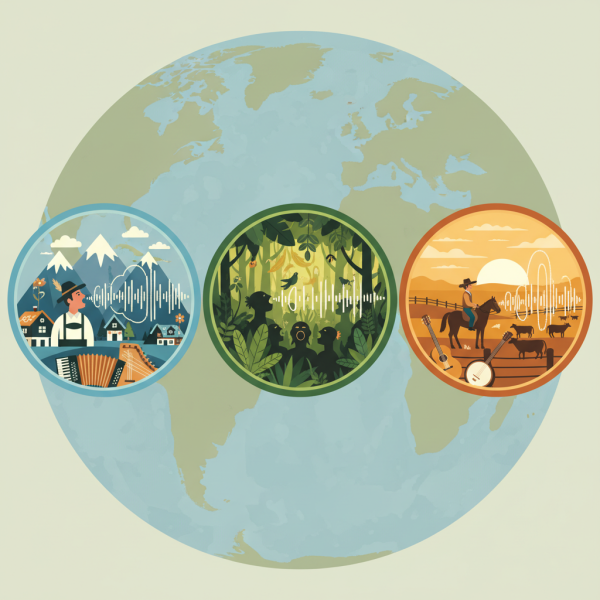
When the word 'yodeling' comes to mind, many instantly envision the snow-capped peaks of the Swiss Alps, adorned with lederhosen-clad figures. While the Alpine yodel is undoubtedly iconic, the fascinating vocal technique of rapidly changing pitch between chest voice and head voice (falsetto) is a global phenomenon, resonating in unexpected corners of the world. Far from the European mountains, yodeling has evolved independently, or been adapted, into unique cultural expressions. This article will journey beyond the familiar, delving into the distinct yodeling traditions of Central Africa and the American cowboy, exploring their origins, characteristics, and how they diverge from the celebrated Alpine version.
What is Yodeling? A Brief Overview
At its core, yodeling is a vocal art form characterized by a swift and repeated alteration between the singer's normal voice (chest voice) and their high-pitched, often ethereal falsetto (head voice). This transition, known as a vocal break, is executed with control and agility, creating a distinctive, undulating sound. Historically, yodeling served various practical purposes, from long-distance communication across valleys to herding animals and expressing emotions. Its expressive power lies in this dramatic shift in vocal registers, capable of conveying joy, sorrow, or simple commands.
The Iconic Alpine Yodel
To understand the unique qualities of other yodeling traditions, it's helpful to establish a baseline with the Alpine style. Originating in the mountainous regions of Europe, particularly Switzerland, Austria, and Bavaria, Alpine yodeling is often highly structured and melodic. It's deeply intertwined with folk music, frequently accompanied by instruments like the accordion, zither, or guitar. Its functions historically included calling livestock, communicating between alpine farms, and celebratory music. Alpine yodels are typically characterized by:
- Complex melodic patterns and intricate rhythmic structures.
- A clear, powerful vocal delivery, often with sustained notes.
- Integration into structured songs and performances.
- Strong cultural association with regional identity and tradition.
This traditional form sets a standard for vocal agility and cultural significance against which other global variations can be compared.
Central African Yodeling: Forest Echoes
Venturing deep into the rainforests of Central Africa, particularly among the Mbuti (Pygmy) people of the Congo Basin, we discover a form of yodeling that is profoundly different from its Alpine counterpart. Here, yodeling is not merely entertainment but an integral part of daily life, ritual, and spiritual expression. The Mbuti's environment, dense and lush, influences their vocalizations, which are designed to carry through thick foliage and communicate across distances while hunting or gathering.
Central African yodeling is often communal, improvised, and characterized by:
- A focus on polyphony and communal participation, with multiple voices intertwining.
- Less emphasis on structured melody and more on a fluid, improvisational quality.
- Mimicry of natural sounds, such as birds or animals, blending human voice with the forest soundscape.
- Deep connection to spiritual practices, hunting rituals, and storytelling.
Unlike the precise, often solo-driven Alpine yodel, Central African yodeling is a collective experience, embodying the community's relationship with their environment and spiritual world. The vocal breaks are often softer, more ethereal, and integrate seamlessly into a complex tapestry of sound.
American Cowboy Yodeling: The Open Range Call
Crossing the Atlantic to the vast plains and ranches of North America, we encounter the distinct tradition of American cowboy yodeling. While its roots can be traced to European immigrants, including German and Swiss settlers, it evolved into a unique expression shaped by the rugged lifestyle of the American frontier. Cowboy yodeling was primarily functional, serving practical needs on the open range.
Key characteristics of American cowboy yodeling include:
- Use in herding cattle, calming anxious livestock, and communicating across vast distances.
- Often simpler, more direct melodies, focusing on clear, sustained falsetto notes.
- A blend of European vocal techniques with American folk and country music styles.
- Strong association with themes of solitude, freedom, and the natural landscape.
Figures like Jimmie Rodgers, the 'Father of Country Music,' popularized cowboy yodeling, integrating it into early country and western songs. His style, often featuring distinct, drawn-out falsetto breaks, became synonymous with the genre. The cowboy yodel often projects a sense of individualism and resilience, reflecting the solitary nature of ranch work, yet also serves as a bonding element within cowboy culture.
Comparing the Styles: Beyond the Alps
While all three traditions share the fundamental vocal technique of moving between chest and head voice, their cultural contexts, musical structures, and functions create distinct soundscapes:
- Melodic Complexity and Structure: Alpine yodeling often showcases the most intricate and pre-composed melodic lines. American cowboy yodeling tends to be simpler, more direct, and emotionally resonant. Central African yodeling, especially among the Mbuti, is highly improvisational and polyphonic, focusing on collective sound rather than individual melodic precision.
- Function and Context: Alpine yodeling serves for communication, celebration, and cultural identity in mountainous regions. Cowboy yodeling's primary role was practical on the ranch – herding and communication – but also entertainment. Central African yodeling is deeply embedded in ritual, community building, hunting, and storytelling within the forest environment.
- Instrumentation and Accompaniment: Alpine yodeling frequently features traditional European folk instruments. Cowboy yodeling often pairs with guitars, fiddles, and banjos. Central African yodeling is often unaccompanied or supported by simple percussion, allowing the human voice to dominate and interact directly with the natural world.
- Communal vs. Individual: Central African yodeling is profoundly communal and participatory. Alpine yodeling can be both solo and group-oriented. American cowboy yodeling often highlights individual expression, though group performances are also common.
These comparisons highlight how diverse environments and cultural needs shape the same basic vocal phenomenon into vastly different, yet equally compelling, artistic expressions.
Conclusion
The journey through Central African and American cowboy yodeling reveals that this remarkable vocal technique is far more universal and multifaceted than its popular Alpine image suggests. From the dense, spiritual forests of the Congo Basin to the expansive, solitary ranches of the American West, yodeling adapts, evolves, and thrives as a testament to human ingenuity and cultural expression. Each variation, shaped by its unique environment and societal function, enriches our understanding of global vocal traditions. Yodeling is not just a quaint mountain call; it is a global chorus, echoing the diverse stories and spirits of humanity across continents and cultures.
Comprehension questions
 What is the fundamental vocal technique that defines yodeling across different cultures?How does Central African yodeling, particularly among the Mbuti, differ from Alpine yodeling in terms of its social function and melodic structure?What were the primary practical functions of American cowboy yodeling on the open range?Identify two key similarities and two key differences between Central African yodeling and American cowboy yodeling.