
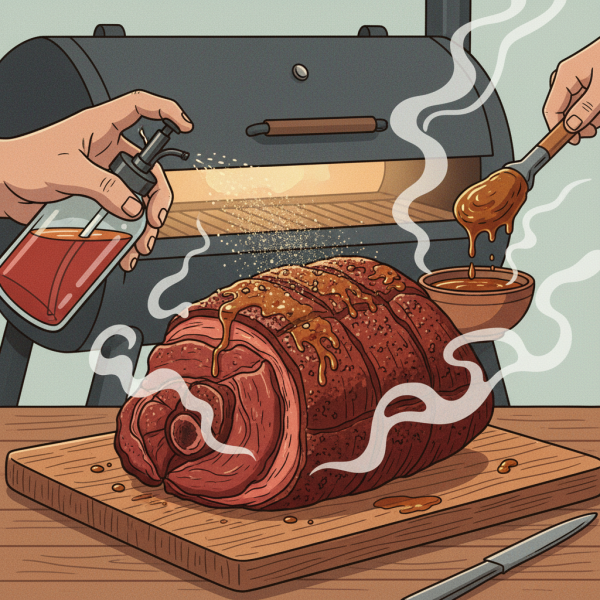
Mastering BBQ Surface Moisture Through Mopping and Spritzing
What you'll learn
 Surface moisture benefitsMop and spritz techniquesApple juice and vinegar rolesCustomization and timing
The Art of Surface Moisture Management
For any serious outdoor cook who dedicates countless hours to perfecting their BBQ and smoked meats, the battle against dryness is a constant one. While low and slow cooking is the cornerstone of tender, succulent results, maintaining the right level of surface moisture is a crucial, often overlooked, technique. This isn't just about preventing your masterpiece from turning into shoe leather; it's about actively enhancing flavor, promoting that coveted bark, and ensuring every wisp of smoke adheres beautifully to the meat. Enter the world of mopping and spritzing – simple yet profound methods that leverage humble liquids like apple juice and vinegar to elevate your outdoor cooking game.
The Science Behind the Spritz and Mop
When meat cooks slowly over extended periods, especially in the dry, smoky environment of a pit or smoker, it naturally loses moisture. This moisture loss is a primary reason why meats can become dry and tough. The surface of the meat also undergoes significant changes, forming a crust known as the "bark." This bark is a highly prized element in BBQ, contributing rich flavor and texture. Spritzing and mopping aim to counteract excessive moisture loss and actively participate in bark formation and smoke adhesion.
By regularly applying a thin layer of liquid to the meat's surface, you create a momentary evaporative cooling effect. This cooling can slightly slow down the cooking process at the surface, giving connective tissues more time to break down and rendering fat more effectively. More importantly, this moist surface acts as a magnet for smoke particles. Smoke, which is essentially tiny solid particles and gases, adheres more readily to a damp, slightly tacky surface than to a dry one. This helps to build that deep, smoky flavor and creates a darker, more robust bark.
Mops vs. Spritzes: Understanding the Tools
While often used interchangeably by beginners, mopping and spritzing refer to distinct application methods, though their goals are similar.
- Mopping: This traditional technique involves using a BBQ mop (a small, stringy brush resembling a mini household mop) to brush a thicker, often vinegar or oil-based sauce onto the meat. Mops typically deliver a more substantial coating of liquid. They are excellent for imparting a strong flavor profile directly onto the meat and are often used earlier in the cook to build a foundational layer of flavor and moisture.
- Spritzing: Spritzing involves using a spray bottle to apply a fine mist of liquid to the meat's surface. This method is gentler, adding a lighter, more even layer of moisture without disturbing the rub or bark development too much. Spritzes are popular for their convenience and their ability to provide consistent surface hydration. They are particularly favored for their ability to help maintain moisture without washing away the spice rub.
Both methods achieve the goal of adding surface moisture, but the choice often comes down to personal preference, the type of meat, and the desired outcome.
The Sweet Secret: Apple Juice
Apple juice is a superstar in the spritzing world, and for good reason. Its natural sugars contribute to the Maillard reaction on the surface of the meat, which is responsible for browning and the development of complex, savory flavors that form the bark. When these sugars caramelize slightly under the heat, they create a beautiful, dark crust that is both visually appealing and incredibly flavorful.
Beyond its browning capabilities, apple juice provides a subtle sweetness that complements many smoked meats, particularly pork (ribs, pulled pork) and chicken. It helps to balance the richness of the meat and the savory notes of the rub and smoke. The moisture it adds is gentle, preventing the surface from drying out and creating that ideal tacky layer for smoke adhesion. Many pitmasters dilute apple juice with a little apple cider vinegar or water to tone down the sweetness and prevent excessive charring.
The Tangy Touch: Vinegar's Magic
Vinegar, especially apple cider vinegar, is another cornerstone of surface moisture management in BBQ. Its acidity plays several crucial roles:
- Tenderization: While not a deep tenderizer in the way a marinade would be, the mild acidity on the surface can help to slightly break down protein fibers, contributing to a more tender exterior.
- Flavor Brightening: Vinegar cuts through the richness of fatty meats, adding a much-needed tang and brightness to the overall flavor profile. It prevents the meat from tasting overly heavy or one-dimensional.
- Smoke Adhesion: Similar to apple juice, the moisture from vinegar creates an ideal surface for smoke particles to cling to, ensuring a deep smoke ring and robust smoke flavor.
- Bark Development: While not directly sugary, the acidity can interact with meat proteins to aid in bark formation, often resulting in a darker, more pronounced crust, especially when combined with other ingredients.
Apple cider vinegar is often preferred for its milder, fruitier notes compared to harsher white vinegar, making it a natural fit for BBQ. It can be used straight, diluted with water, or mixed with other liquids like apple juice or even beer.
Crafting Your Signature Spritz or Mop
The beauty of mopping and spritzing lies in the endless possibilities for customization. While apple juice and vinegar are excellent starting points, many pitmasters develop their own secret concoctions. Here are some common ingredients and considerations:
Common Spritz/Mop Ingredients:
- Apple juice (or cider)
- Apple cider vinegar
- Water (to dilute or as a base)
- Beer (lager or ale for malty notes)
- Worcestershire sauce (umami and depth)
- Hot sauce (a touch of heat)
- Melted butter (richness and browning)
- Spices (garlic powder, onion powder, paprika for extra flavor)
- Brown sugar (for added sweetness and bark development)
When mixing, consider the flavor profile of your rub and the meat you're cooking. For pork, sweet and tangy often works well. For beef, a more savory or acidic blend might be preferred. Start with simple combinations and experiment. A common spritz ratio might be 50% apple juice, 40% apple cider vinegar, and 10% water, perhaps with a dash of Worcestershire.
Application Techniques and Timing
Knowing what to spritz or mop with is only half the battle; knowing when and how is equally important.
- When to Start: Most pitmasters recommend waiting until the rub has set, usually an hour or two into the cook. Applying too early can wash off your precious rub.
- Frequency: This is highly variable. Some spritz every 30-60 minutes, others less frequently, perhaps every 90 minutes to 2 hours. Factors include pit temperature, humidity, meat size, and desired bark. For beginners, checking the surface dryness is key; if it looks dry, spritz it.
- Application:
- For spritzing, use a fine mist. Don't drench the meat. A light, even coating is all you need. Too much liquid can cool the meat significantly and slow down the cook.
- For mopping, apply a thin, even layer. Avoid heavy globs of sauce.
- Consistency: Try to be consistent with your chosen frequency. This helps maintain an even cooking environment and bark development.
Remember that opening the smoker door or lid to spritz or mop causes a temperature drop. Be quick and efficient to minimize heat loss.
Dispelling Myths and Common Pitfalls
There are a few common concerns outdoor cooks often have about spritzing and mopping:
"Will it wash off my rub?" If applied too early or too heavily, yes. Wait until the rub has adhered, and use a fine mist for spritzing. Mopping is generally done with a thicker liquid, so ensure the rub is well-set.
"Will it cool down my pit too much?" A quick, light spritz or mop will cause a minimal and temporary temperature drop that the smoker can quickly recover from. Drenching the meat or leaving the lid open for too long will indeed have a more significant impact.
"Is it absolutely necessary?" No, excellent BBQ can be made without spritzing or mopping. However, it's a tool that can significantly improve results, especially for longer cooks where moisture loss is a major concern. It's an enhancement, not a requirement.
Finding Your Balance and Experimentation
Like all aspects of BBQ, mopping and spritzing is both a science and an art. There's no single "right" way that applies to every piece of meat, every smoker, or every climate. The best approach is to understand the principles and then experiment. Start with simple apple juice or apple cider vinegar, observe how your meat responds, and adjust your frequency and mixture based on your results. Pay attention to the bark development, the juiciness of the final product, and the depth of smoke flavor. Over time, you'll develop an intuitive feel for when your meat needs that little extra kiss of moisture and flavor.
The Power of Proactive Moisture
In the realm of outdoor cooking, mastering surface moisture management through mopping and spritzing is a valuable technique for any BBQ enthusiast. By strategically applying liquids like apple juice and vinegar, cooks can effectively combat dryness, promote the formation of a rich, flavorful bark, and ensure maximum smoke adhesion to their meats. Understanding the subtle differences between mopping and spritzing, and experimenting with various liquid combinations and application timings, empowers you to elevate your smoked and grilled creations to new heights of tenderness, juiciness, and complex flavor. Embrace these simple yet impactful methods to ensure your next outdoor cooking adventure yields truly exceptional results.
Comprehension questions
 What are the primary benefits of managing surface moisture on meat during long cooks?Explain the key differences between mopping and spritzing techniques, including their typical applications.How do apple juice and vinegar contribute differently to flavor, bark formation, and smoke adhesion?When is the recommended time to start spritzing or mopping meat, and what are some factors that influence application frequency?