
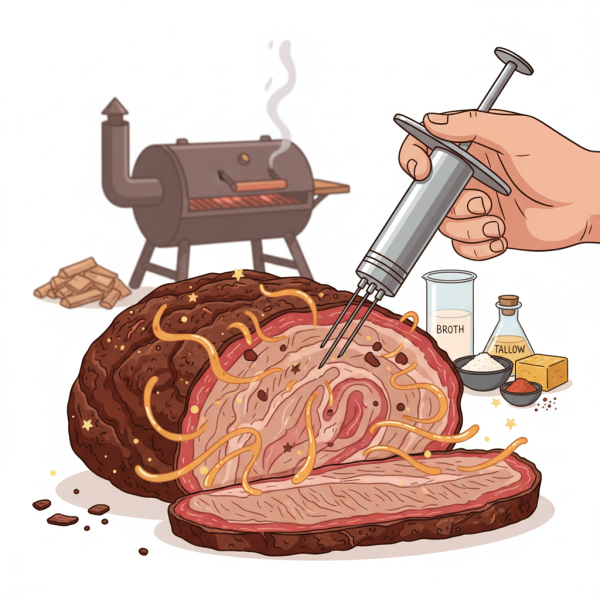
Injection Secrets: Boosting Flavor from the Inside Out
What you'll learn
 Meat Injection FundamentalsInjection Ingredients and ScienceTechnique for Brisket & Pork ButtAdvanced Injection Strategies
Outdoor cooks, get ready to revolutionize your BBQ game. We all strive for that perfect bark, tender bite, and explosion of flavor in our smoked meats. While rubs and mops play their crucial roles, there's a secret weapon often underutilized by even seasoned pitmasters: the meat injector. This powerful tool allows us to bypass the surface and deliver a concentrated burst of moisture, fat, and seasoning directly into the heart of brisket and pork butt, transforming good BBQ into legendary BBQ. It's about building flavor from the inside out, ensuring every single shred or slice is packed with deliciousness.
Why Inject? The Science of Flavor Delivery
Think about traditional marinades. They work wonders for smaller cuts, but for thick, dense muscles like a brisket flat or a pork butt, their penetration is often limited to the outer few millimeters. This leaves the vast majority of the meat untouched by the internal flavor infusion we crave. The meat injector changes this dynamic entirely.
By injecting a flavorful liquid directly into the muscle fibers, you achieve immediate and deep penetration. This isn't just about adding flavor; it's also about significantly boosting moisture content. As meat cooks, it naturally loses moisture. An injected solution helps to counteract this, leading to a juicier, more tender final product that withstands longer smoking times without drying out.
Furthermore, certain injection ingredients, like phosphates, have a remarkable ability to help muscle fibers retain their natural moisture and even absorb more. This scientific advantage translates directly into a more succulent, melt-in-your-mouth experience that will have your guests asking for your secrets.
The Right Tools for the Job
Before you dive into the world of internal flavor bombs, you need the right equipment. A good quality meat injector is an investment that will pay dividends in flavor and tenderness.
Types of Injectors: You'll typically find plastic and stainless steel models. While plastic injectors are cheaper, they often break easily and can be hard to clean thoroughly. Stainless steel injectors, though a bit more expensive, are durable, easy to sanitize, and designed for heavy use. Look for one with a comfortable grip and a sturdy plunger mechanism.
Needle Selection: Most injectors come with multiple needles. You'll want a larger gauge needle with a wide opening for thicker liquids, especially if you're injecting finely minced garlic or herbs. A needle with multiple smaller holes along the shaft is excellent for dispersing thinner liquids more evenly throughout the meat, preventing large pockets of solution.
Maintenance is Key: After each use, disassemble your injector and clean all components thoroughly with hot, soapy water. Run water through the needles to ensure no particles are left behind. Proper cleaning prevents clogs and ensures your injector is ready for its next mission.
The Magic Ingredients – Phosphates, Fats, and Seasonings
The true artistry of injection lies in the concoction you create. This is where you elevate your game, delivering specific attributes directly where they're needed most.
Phosphates: Often overlooked by beginners, food-grade phosphates (like sodium phosphate) are game-changers. They work by increasing the pH level of the meat, which in turn enhances its water-holding capacity. This means a juicier product and less moisture loss during the long cooking process. A common ratio is about 0.5-1% phosphate by weight of the liquid, but always follow manufacturer guidelines carefully. They don't add flavor themselves, but they are crucial for moisture retention.
Fats for Flavor and Mouthfeel: Injecting fat is a secret weapon for richness. Melted unsalted butter, beef tallow, or even duck fat can be injected. The key is to melt the fat and keep it warm enough so it doesn't solidify in the needle. Fat distributes throughout the muscle, melting during the cook and basting the meat from the inside, contributing to an incredibly rich flavor and tender mouthfeel.
Soluble Seasonings: This is your direct flavor delivery system. Think finely ground salt, sugar, garlic powder, onion powder, paprika, and chili powder. These dry seasonings must be completely dissolved in your liquid base to prevent clogging your injector. Experiment with your favorite rub components, but remember, solubility is paramount.
Liquid Flavorings: This forms the base of your injection. Common choices include beef broth, chicken broth, apple juice, beer, Worcestershire sauce, soy sauce, or even a splash of vinegar. These liquids carry the other ingredients and add their own layer of flavor and moisture. A good starting point is a strong broth or stock, then build from there.
Here are some common injection ingredients and their primary purposes:
- Beef/Chicken Broth: Base liquid, adds moisture and savory depth.
- Water: Diluent, allows other flavors to spread, especially with phosphates.
- Salt: Enhances overall flavor, helps tenderize slightly.
- Sugar (Brown or White): Balances savory notes, aids in bark formation.
- Garlic/Onion Powder: Fundamental aromatic flavor enhancers.
- Worcestershire/Soy Sauce: Umami boost, adds complexity and depth.
- Apple Juice/Cider Vinegar: Adds a touch of sweetness and acidity, brightens flavor.
- Melted Butter/Tallow: Boosts richness, moisture, and mouthfeel.
- Food-Grade Phosphates: Crucial for internal moisture retention and juiciness.
Mastering the Technique – Brisket and Pork Butt Specifics
Proper injection technique is crucial for even distribution and avoiding unsightly pockets of liquid. The goal is to saturate the meat without rupturing too many fibers or causing the solution to leak excessively.
General Technique: Fill your injector and push out any air bubbles. Insert the needle deep into the meat, almost all the way through, then slowly depress the plunger as you withdraw the needle. This distributes the liquid throughout the depth of the muscle. Inject in a grid pattern, spacing injections about 1 to 1.5 inches apart. You might see a slight swelling where you inject; this is normal. Try to inject against the grain where possible, or perpendicular to it, to maximize dispersion within the muscle fibers.
Brisket Injection: For brisket, focus heavily on the flat. It's leaner and more prone to drying out. The point section already has more fat, so it requires less, but don't neglect it entirely. Aim for 8-12% of the meat's weight in injection solution. For a 12lb brisket, that's about 15-23 ounces of liquid. Ensure you inject deep into the thickest parts of the flat. Some leakage is inevitable; have a pan ready.
Pork Butt Injection: Pork butt (or Boston butt) is more forgiving due to its higher fat content and marbling, but injection still elevates it significantly. Aim for 8-10% of its weight in solution. The key here is even distribution throughout the entire cut, working around the bone if present. Don't be shy; pork butt can handle a good amount of liquid.
Here are some best practices to ensure a successful injection:
- Keep it Warm: If using fats, keep your injection solution warm (not hot) to prevent fats from solidifying in the needle.
- Inject Slowly: Rapid injection can create large pockets and cause more leakage.
- Mind the Grain: Injecting parallel or slightly against the grain can help distribute liquid along muscle fibers.
- Even Distribution: Use a grid pattern to ensure no area is left untouched.
- Don't Overdo It: While you want good coverage, injecting too much can cause the meat to become watery or burst. Stick to recommended percentages.
- Rest After Injection: Let the injected meat rest for at least 30 minutes, or even a few hours in the fridge, to allow the solution to equalize and be absorbed further before cooking.
Beyond the Basics – Advanced Tips
Once you've mastered the fundamentals, you can start experimenting and refining your injection techniques.
Temperature Matters: Injecting cold liquid into cold meat can prolong the time it takes for the meat to come up to smoking temperature. Ideally, your injection solution should be at room temperature or slightly warm, especially if it contains melted fats. Always ensure that any ingredients like broth or water are food-safe temperature before mixing.
Marinade vs. Injection: Think of injection as precision strike warfare, and marinades as area bombing. While an injection delivers flavor deep inside, a good surface rub and a short external marinade (if desired) can still complement the internal flavor profile by enhancing the bark and outer crust. They are not mutually exclusive; they are synergistic.
Safety and Hygiene: Always use clean equipment. Your injection solution should be prepared in a clean environment with fresh ingredients. If you're not cooking the meat immediately after injection, store it properly refrigerated. Never re-use injection liquid that has been in contact with raw meat.
Experimentation is Key: The best pitmasters are also mad scientists. Don't be afraid to tweak ratios, add new soluble spices, or combine different liquid bases. Keep notes on what works and what doesn't. Your perfect brisket or pork butt injection might be just one experiment away.
Summary
In summary, integrating meat injection into your outdoor cooking repertoire is a powerful way to significantly enhance the flavor, moisture, and tenderness of large cuts like brisket and pork butt. We've explored the benefits of deep flavor delivery, the essential tools required, and the magic ingredients including phosphates for moisture retention, fats for richness, and a variety of soluble seasonings and liquid bases for complex flavors. Mastering techniques for even distribution and understanding specific needs for brisket and pork butt are crucial. By focusing on proper technique, hygiene, and a willingness to experiment, you can transform your BBQ, ensuring every bite is a testament to internal flavor and juicy perfection.
Comprehension questions
 What are the primary benefits of using a meat injector compared to traditional marinades for large cuts of meat?Which three main categories of ingredients are crucial for a successful injection solution, and what specific purpose does each serve?Describe the general technique for injecting meat, including how to insert and withdraw the needle and how to ensure even distribution.