
The Whimsical World of Walter Potter: Anthropomorphic Taxidermy Dioramas
What you'll learn
 Walter Potter's life and unique artistryThe nature of anthropomorphic taxidermyKey examples of Potter's whimsical dioramasThe historical context and legacy of his work
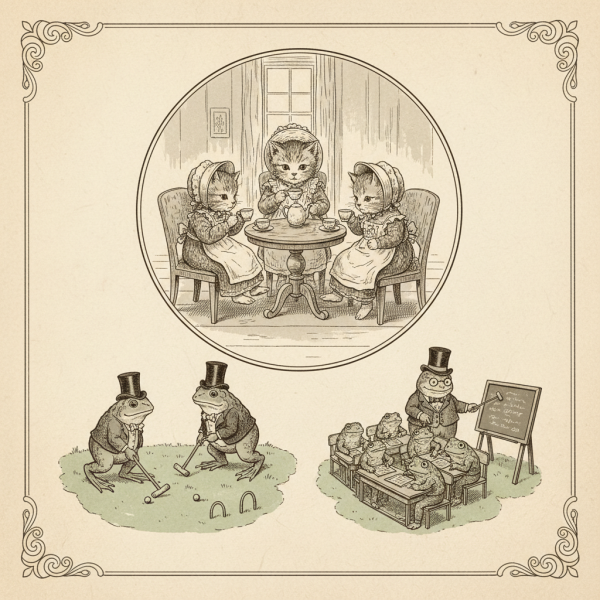
Welcome to a fascinating exploration of a peculiar art form that blossomed in the Victorian era: anthropomorphic taxidermy dioramas. Our journey will take us into the enchanting, and sometimes unsettling, world created by Walter Potter, a self-taught taxidermist whose elaborate scenes of animals engaged in human-like activities captivated audiences for over a century. From kittens enjoying a genteel tea party to toads engaged in a spirited game of croquet, Potter's work invites us to ponder the boundaries of art, natural history, and human imagination.
Who Was Walter Potter?
Walter Potter was born in 1873 in Bramber, Sussex, England. Unlike many professional taxidermists of his time, Potter was largely self-taught. His early fascination with preserving animals began when he was a mere teenager, starting with a pet canary. His skills quickly developed, leading him to open a museum dedicated to his taxidermy creations, first in his father's house and later in a purpose-built structure in Bramber. Potter's work was distinct not just for its technical proficiency but for its narrative ambition, transforming preserved creatures into characters in elaborate, often humorous, tableaux.
His background as the son of an innkeeper and his rural upbringing likely contributed to his intimate knowledge of local fauna and a practical, hands-on approach to his craft. He collected many of his subjects from the surrounding countryside, often receiving deceased animals from local farmers or finding them himself. This direct connection to the natural world informed the realism of his individual specimens, even as their arrangements defied nature.
The Art of Anthropomorphic Taxidermy
Anthropomorphic taxidermy involves the practice of mounting animals in human-like poses or dressing them in miniature clothing to mimic human activities. This art form gained popularity in the Victorian era, a period characterized by scientific curiosity, burgeoning natural history museums, and a fascination with the bizarre and macabre. Taxidermy itself was flourishing, seen as a way to preserve specimens for scientific study or as exotic decorative pieces. Walter Potter elevated this craft into a storytelling medium.
Potter's specific genius lay in his ability to imbue his animal subjects with personality and to construct intricate narrative scenes. Each diorama was a miniature world, meticulously arranged with tiny props, furniture, and backdrops. The attention to detail, from the expressions on the animals' faces to the folds in their miniature garments, was astounding, creating a vivid illusion of animals truly living out human dramas.
Potter's Famous Dioramas
Potter's museum became famous for its diverse collection, but it was his anthropomorphic dioramas that truly captured the public's imagination. These scenes, often playful and sometimes darkly humorous, became his signature.
-
The Kitten's Tea Party
Perhaps his most iconic work, this diorama features 20 kittens, dressed in bonnets and aprons, gathered around a miniature table, sipping tea and engaging in polite conversation. The scene is incredibly detailed, with tiny teacups, saucers, and even a miniature teapot. Each kitten is posed uniquely, conveying a sense of individual character and interaction within the group. It is a masterpiece of whimsical storytelling through taxidermy, challenging viewers to suspend disbelief and appreciate the sheer artistry.
-
The Frogs' School
Another beloved diorama, this piece depicts a class of 38 young frogs attentively listening to a stern-looking frog teacher. Some "students" are diligently taking notes, others appear to be daydreaming, and one is even being disciplined. The scene is complete with tiny desks, slates, and an old-fashioned blackboard, offering a charming glimpse into a frog-filled classroom straight out of a children's storybook.
-
Toads Playing Croquet
This dynamic diorama captures a group of toads, dressed in Victorian attire, engaged in a lively game of croquet. The poses convey movement and competition, with mallets raised and balls scattered across a miniature green. It exemplifies Potter's ability to create a sense of action and narrative even with static subjects, bringing a surprising vivacity to the scene.
-
The Death and Burial of Cock Robin
While many of his works were lighthearted, Potter also created pieces with a more somber tone, often drawing from popular nursery rhymes or moral tales. This diorama, based on the traditional English nursery rhyme, portrays various birds mourning and burying their fallen comrade. It showcases a different facet of his artistry, exploring themes of mortality and community with a poignant, albeit still anthropomorphic, touch.
The Appeal and Controversy
Walter Potter's museum was immensely popular for over a century, attracting thousands of visitors who marveled at his unique creations. The appeal lay in their novelty, the meticulous craftsmanship, and the charming absurdity of animals mirroring human society. For many, it was a fascinating intersection of natural history and fantasy, offering a whimsical escape.
However, modern sensibilities often view such taxidermy with a degree of unease or even ethical concern. The idea of animal exploitation, even after death, for entertainment purposes raises questions. Yet, in Potter's time, these concerns were less prevalent, and his work was largely celebrated as a curious form of artistic expression. His subjects were typically common animals, not rare or endangered species, and were often found already deceased. Understanding his work requires placing it within its historical context, appreciating the skill and imagination involved while acknowledging contemporary ethical perspectives.
Legacy and Influence
Walter Potter's museum closed its doors permanently in 1972, and his collection was eventually dispersed through auction, much to the dismay of preservationists and fans. Despite this, his legacy endures. His work is remembered as a unique and significant contribution to Victorian popular culture and the art of taxidermy. He demonstrated the potential of taxidermy to transcend mere preservation and become a medium for storytelling and artistic expression. His dioramas continue to inspire artists and spark conversations about the relationship between humans and the animal kingdom, serving as a peculiar, charming, and sometimes unsettling reminder of a bygone era's artistic whims.
Summary
This article delved into the whimsical and intricate world of Walter Potter's anthropomorphic taxidermy dioramas, exploring the life of this self-taught Victorian artist and the unique craft he mastered. We examined the historical context of anthropomorphic taxidermy and highlighted some of Potter's most celebrated works, including the iconic "Kitten's Tea Party" and "Frogs' School." The discussion also touched upon the enduring appeal and contemporary ethical considerations surrounding his art, concluding with an appreciation of his lasting legacy in popular culture and the artistic realm.
Comprehension questions
 What historical era was Walter Potter's anthropomorphic taxidermy particularly popular?Name two of Walter Potter's most famous anthropomorphic dioramas mentioned in the article.How did Walter Potter's background likely influence his approach to taxidermy?What is anthropomorphic taxidermy, and what ethical considerations does it sometimes raise today?