
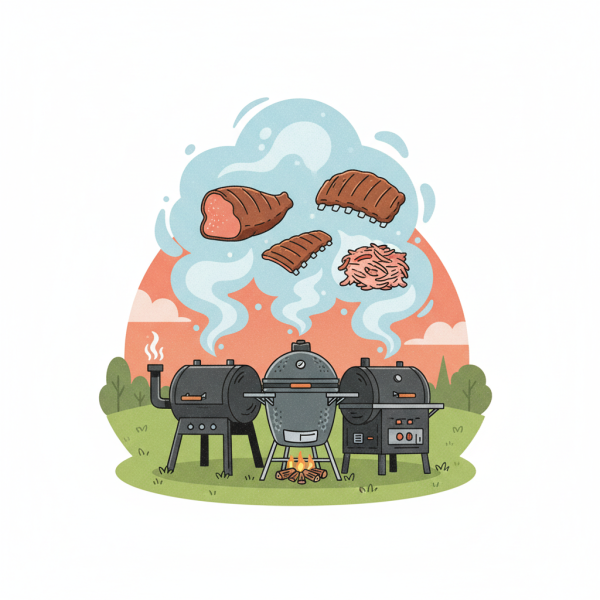
The Anatomy of a Smoker: Choosing Your First Rig
What you'll learn
 Smoker Types OverviewFuel and AirflowBeginner Smoker SelectionMaintenance and Versatility
Introduction to the World of Smoke
Welcome, fellow outdoor cooking enthusiast, to the intoxicating world of low-and-slow barbecue! The pursuit of perfectly smoked meats is a journey filled with flavor, aroma, and the satisfying patience of a true artisan. For many who've mastered the grill, the smoker represents the next frontier, promising tender briskets, fall-off-the-bone ribs, and succulent pulled pork. However, standing at the precipice of this culinary adventure, you might find yourself overwhelmed by the sheer variety of smoking rigs available. Choosing your first smoker can feel like a monumental decision, but fear not! This guide will break down the fundamental types – offsets, pellets, drums, and ceramics – helping you understand their unique anatomies, fuel styles, and airflow characteristics to find the perfect match for your smoking aspirations.
Understanding the Basics: Airflow and Fuel
Before diving into specific smoker types, it’s crucial to grasp two core concepts: airflow and fuel. These are the twin engines driving every successful smoking session. Airflow dictates how efficiently your fuel burns and how much oxygen reaches your fire, directly influencing temperature stability and smoke quality. Proper airflow management is key to preventing bitter creosote buildup and achieving clean, blue smoke.
Fuel, on the other hand, isn't just about heat; it's about flavor. Different types of smokers are optimized for different fuels, whether it's wood splits, charcoal, or compressed wood pellets. Understanding how your chosen fuel interacts with the smoker's design and airflow system is fundamental to producing delicious, consistently smoked food.
Offset Smokers: The Traditionalist's Choice
The offset smoker, often revered by purists, is what many picture when they think of traditional barbecue. Characterized by a separate firebox connected to a larger cooking chamber, these rigs operate by drawing heat and smoke from the firebox, through the cooking chamber, and out a chimney stack. This indirect heating method provides ample space for smoke to infuse into your meats.
- Fuel Style: Primarily wood splits or chunks. Mastering fire management with wood is an art form, requiring regular feeding and careful adjustment of dampers.
- Airflow: Managed by an intake damper on the firebox and an exhaust stack damper on the cooking chamber. Precise control allows you to dictate burn rate and temperature.
- Pros: Unparalleled, authentic wood smoke flavor; large cooking capacity; a highly engaging, hands-on cooking experience.
- Cons: Steep learning curve; requires constant attention and frequent fuel additions; can be fuel-hungry; often has hot and cool spots in the cooking chamber, necessitating meat rotation.
Offset smokers are for those who enjoy the process as much as the product, willing to invest time and effort into fire mastery.
Pellet Grills: Set It and Forget It Smoker
Pellet grills have surged in popularity due to their user-friendliness and remarkable temperature control. These technologically advanced smokers feature a hopper filled with compressed hardwood pellets, an auger that feeds pellets into a burn pot, a hot rod igniter, and a fan. A digital controller allows you to set your desired temperature, and the grill largely maintains it for you.
- Fuel Style: Hardwood pellets, available in various wood types for different flavor profiles.
- Airflow: Electronically controlled fan circulates heat and smoke evenly throughout the cooking chamber.
- Pros: Extremely easy to operate; precise and consistent temperature control; excellent for long overnight cooks; versatile enough for smoking, grilling, roasting, and baking; minimal supervision required.
- Cons: Relies on electricity; smoke flavor can be less intense than traditional wood smokers; specific fuel (pellets) can be more expensive than charcoal or wood splits; some models may struggle in very cold weather.
A pellet grill is an excellent choice for beginners seeking convenience and consistent results without the steep learning curve of a traditional smoker.
Drum Smokers (UDS - Ugly Drum Smoker): Simple and Effective
The drum smoker, often affectionately called a UDS (Ugly Drum Smoker), is a testament to simplicity and effectiveness. Typically a 55-gallon steel drum converted for smoking, it features a charcoal basket at the bottom, cooking grates suspended above, and intake/exhaust vents. Heat and smoke rise directly from the charcoal and wood chunks to envelop the food.
- Fuel Style: Primarily lump charcoal or briquettes, with wood chunks added for smoke flavor.
- Airflow: Controlled by bottom intake vents and a top exhaust vent. Its vertical design creates a natural convection current.
- Pros: Excellent smoke flavor; very fuel-efficient; robust and portable; relatively inexpensive to buy or build; good cooking capacity; produces consistently moist meat due to proximity to the water pan (if used).
- Cons: Can be messy to clean; temperature control is less precise than pellet or ceramic smokers; can be challenging to maintain very low temperatures for extended periods; primarily vertical cooking space.
Drum smokers are ideal for those who appreciate hands-on control, fuel efficiency, and robust smoke flavor without the complexity or cost of an offset.
Ceramic Grills (Kamados): The Versatile All-Rounder
Kamado-style ceramic grills, inspired by ancient Japanese cooking vessels, are true marvels of culinary engineering. Their thick ceramic walls provide exceptional insulation, allowing for incredibly stable temperatures and remarkable fuel efficiency. These egg-shaped grills are renowned for their versatility, capable of smoking, grilling, baking, and even searing at very high temperatures.
- Fuel Style: Lump charcoal is the preferred fuel, complemented by wood chunks for smoking.
- Airflow: Precisely controlled via a bottom intake damper and a top exhaust vent. The ceramic construction helps maintain heat even with minimal airflow.
- Pros: Unbeatable heat retention and fuel efficiency; incredibly versatile for a wide range of cooking temperatures; produces juicy, tender results; durable and long-lasting; excellent smoke flavor.
- Cons: Very heavy and fragile (can crack if mishandled); typically more expensive than other smoker types; temperature changes can be slow due to excellent insulation; steep learning curve for precise temperature adjustments.
For the outdoor cook seeking a single, highly versatile, and premium cooking appliance that excels at everything from low-and-slow smoking to high-heat searing, a ceramic grill is an outstanding investment.
Making Your Choice: Key Considerations
With an understanding of each smoker type, consider these factors to narrow down your options:
- Budget: Smokers range widely in price, from budget-friendly drums to high-end ceramics and offsets.
- Time and Involvement: Do you want a hands-on experience or a "set it and forget it" approach?
- Cooking Capacity: How much food do you typically need to smoke?
- Versatility: Do you only want to smoke, or do you desire a rig that can also grill, bake, and sear?
- Space: Consider the footprint of the smoker and where you'll store it.
- Fuel Availability: Ensure your preferred fuel type is readily available in your area.
Conclusion
Choosing your first smoking rig is an exciting step into a rewarding culinary hobby. Whether you opt for the traditional wood-fired offset, the convenient pellet grill, the robust drum smoker, or the versatile ceramic kamado, each brings its unique strengths and requires a different level of involvement. By understanding the principles of airflow, fuel management, and the characteristics of each type, you're now equipped to make an informed decision that will lead to countless hours of delicious, smoky satisfaction in your backyard. Happy smoking!
Comprehension questions
 What are the primary advantages of a pellet grill for a beginner smoker?Describe the key airflow mechanisms in an offset smoker and how they contribute to smoke flavor.What is the main fuel source recommended for ceramic grills, and what makes them particularly fuel-efficient?Identify two pros and two cons of using a drum smoker for backyard BBQ.