
Lump Charcoal vs. Briquettes: The Ultimate Fuel Showdown for Outdoor Cooks
What you'll learn
 Charcoal Types ComparisonHeat Management in GrillingFlavor Profiles from FuelEfficiency and Cost of Charcoal
For any outdoor cooking enthusiast, the choice of fuel is as critical as the quality of the meat or the precision of the marinade. The debate between lump charcoal and briquettes has fueled countless backyard barbecues, each side championed by those who swear by its unique advantages. Whether you're a seasoned pitmaster or just starting your journey into the world of grilling and smoking, understanding the fundamental differences between these two primary charcoal types is paramount to mastering your craft. This article delves deep into the characteristics, performance, and practical implications of both lump charcoal and briquettes, helping you decide which fuel best suits your specific cooking style and desired outcomes.
What is Lump Charcoal?
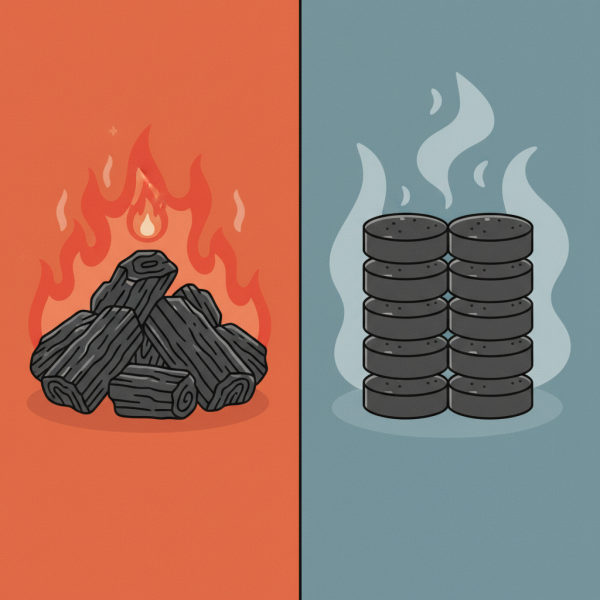
Lump charcoal is essentially pure, carbonized wood. It's made by slowly burning wood in an oxygen-deprived environment, a process that removes water and other volatile compounds, leaving behind nearly pure carbon. This natural form means that lump charcoal often retains the original shape of the wood it came from, sometimes appearing as recognizable chunks of branches or even tree trunks. Its irregular shapes are a hallmark, signifying its direct origin from hardwood.
- Natural Purity: Composed solely of carbonized wood, meaning no binders, fillers, or chemical additives. This translates to a cleaner burn and often a more natural smoke flavor.
- Rapid Ignition: Lump charcoal tends to light up much faster than briquettes, often reaching cooking temperature in 10-15 minutes, which is excellent for spontaneous grilling sessions.
- Higher Heat: It typically burns hotter than briquettes, making it ideal for high-searing tasks like achieving a perfect crust on steaks or quick-cooking vegetables.
- Less Ash: Due to its pure composition, lump charcoal produces significantly less ash than briquettes, simplifying cleanup after your cookout.
What are Briquettes?
Briquettes, on the other hand, are a manufactured product. They are made from a combination of charcoal fines (small pieces of charcoal), wood dust, binders (like starch), and sometimes other additives to aid in consistent burning or easier ignition. These ingredients are compressed into uniform, pillow-shaped pieces. The standardization of briquettes is both their strength and, for some purists, their weakness.
- Consistent Burn: The uniform shape and composition of briquettes lead to a very predictable and consistent burn time and temperature. This reliability is highly valued for longer cooks, such as smoking briskets or pork shoulders, where maintaining a steady temperature over many hours is crucial.
- Longer Burn Time: Briquettes generally burn longer than an equivalent weight of lump charcoal, providing extended cooking periods without the need for frequent replenishment.
- Readily Available and Affordable: Briquettes are typically easier to find in most stores and are often more budget-friendly per pound compared to lump charcoal.
- Easy Stacking: Their uniform shape makes them easy to stack and arrange in your grill or smoker for specific heat zones and consistent heat distribution.
Heat Output and Consistency
When it comes to heat, lump charcoal is the undisputed king of intensity. It can reach extremely high temperatures quickly, which is fantastic for searing. However, its irregular shapes mean that the heat distribution can sometimes be uneven, and its burn rate can vary depending on the size of the pieces. A bag of lump charcoal might contain a mix of large chunks, medium pieces, and small shards, leading to hotspots and cooler areas within the same firebox.
Briquettes excel in consistency. Their uniform size and composition ensure a more even heat distribution and a very predictable burn rate. This makes them ideal for low-and-slow cooking, where maintaining a precise temperature for hours is critical. While they don't reach the same peak temperatures as lump charcoal, their steady output makes temperature management much simpler for indirect grilling and smoking.
Flavor Profile
The flavor imparted by your fuel is a nuanced but crucial aspect of outdoor cooking. Lump charcoal, being pure wood, offers a clean, natural smoky flavor that complements food without overpowering it. Different types of wood used to make lump charcoal (oak, hickory, mesquite, etc.) can also impart subtle variations in flavor, allowing for greater customization for the discerning palate.
Briquettes, due to their binders and additives, tend to produce a more neutral or sometimes slightly chemical aroma, especially during the initial lighting phase. While this typically burns off as the briquettes get fully lit, some purists argue that it can detract from the natural flavor of the food. For many, however, the difference is negligible, especially when cooking foods that produce their own strong flavors or when using wood chips for additional smoke.
Ash Production and Clean-up
Ash production is a practical consideration for any outdoor cook. Lump charcoal is known for producing very little ash. This is a significant advantage, as excessive ash can choke off airflow to your fire, reducing heat and requiring more frequent cleaning of your grill's ash catcher. Less ash means less mess and easier post-cook cleanup.
Briquettes, with their binders and fillers, generate a substantially larger volume of ash. This increased ash production means more frequent emptying of the ash pan during long cooks and a more substantial cleanup effort afterward. If airflow is restricted by too much ash, it can also lead to a decrease in heat and efficiency during a cook.
Cost Considerations
Price often plays a role in the decision-making process. Generally, lump charcoal tends to be more expensive per pound than briquettes. This higher cost reflects its more natural production process and the fact that it's essentially pure carbonized wood. However, some argue that the efficiency and lower ash of lump charcoal might offset some of the cost difference in the long run, as you might use slightly less for certain applications.
Briquettes are typically more affordable and widely available, making them a popular choice for everyday grilling and those on a budget. Their consistent burn and longer duration can also mean fewer reloads during extended cooks, potentially saving fuel, though they produce more ash which is a different kind of cost (cleaning time, disposal).
The Verdict: Which Fuel Wins?
Ultimately, there's no single "winner" in the lump charcoal vs. briquettes debate; it largely depends on your specific cooking needs and preferences. For searing steaks, quick grilling, or when you desire a clean, intense heat and natural flavor with minimal ash, lump charcoal is often the superior choice. Its rapid ignition and high temperatures are perfect for direct grilling.
For low-and-slow smoking, indirect grilling, or when consistent, predictable heat for extended periods is paramount, briquettes are hard to beat. Their uniform burn makes temperature management easier, which is invaluable for long cooks like briskets or ribs. Many experienced outdoor cooks even opt for a hybrid approach, using lump charcoal for initial high heat and then adding a few briquettes for sustained, steady temperatures during longer sessions. Experimentation is key to finding your personal preference and optimizing your outdoor cooking experience.
Summary
This article explored the fundamental differences between lump charcoal and briquettes, two primary fuels for outdoor cooking, detailing their composition, heat characteristics, flavor profiles, ash production, and cost. We highlighted lump charcoal's natural purity, rapid ignition, high heat, and low ash, making it ideal for searing and quick grilling. Conversely, briquettes were noted for their consistent, longer burn, affordability, and ease of temperature management, excelling in low-and-slow smoking. The discussion emphasized that the best choice depends on the specific cooking application, often leading experienced cooks to utilize both for different culinary demands.
Comprehension questions
 What are the main advantages of using lump charcoal, especially for quick grilling?Why are briquettes often preferred for low-and-slow cooking and smoking?How do the ash production and cleanup differ between lump charcoal and briquettes?What is the primary reason some outdoor cooks prefer a hybrid approach using both lump charcoal and briquettes?