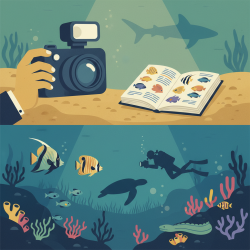
Identifying Marine Species
- -->> 7. Identifying Marine Species
What you'll learn
 Marine Habitat ExplorationUnderstanding Fish BehaviorsSpecies Identification TechniquesEnhancing Underwater Photography
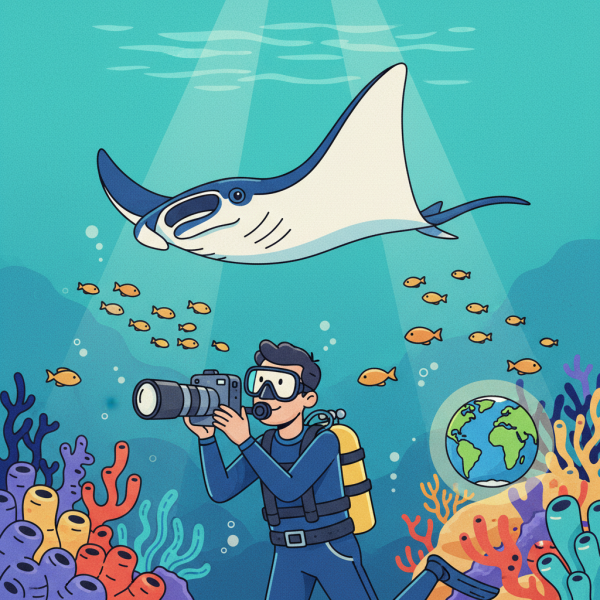
Embarking on the journey of underwater photography is a thrilling endeavor, offering a unique window into the vibrant and mysterious world beneath the waves. While a good camera and technical skills are essential, truly exceptional marine photography often hinges on something more fundamental: the ability to identify and understand the creatures you aim to capture. Recognizing marine species, knowing their typical behaviors, and understanding their preferred habitats significantly increases your chances of successful encounters and allows you to anticipate movements, leading to breathtaking and intimate portraits of the ocean's diverse inhabitants. This guide will delve into the critical aspects of marine life identification, empowering you to become a more informed and effective underwater photographer.
Understanding Marine Habitats
The ocean is a vast tapestry of varied environments, each hosting a unique assemblage of life. Knowing where specific species are likely to be found is a powerful tool for any underwater photographer. Different habitats offer distinct challenges and opportunities for encounters.
Coral Reefs: These vibrant underwater cities are biodiversity hotspots. Home to an astonishing array of fish, invertebrates, and corals, reefs provide shelter, food, and breeding grounds. Expect to find colorful reef fish like angelfish, butterflyfish, parrotfish, and damselfish, often in close proximity to the coral structures. Many smaller, cryptic creatures also hide within the intricate reef framework.
Seagrass Beds: Often overlooked, seagrass meadows are vital nurseries and feeding grounds. They host a different community of species, including sea turtles, dugongs, manatees, seahorses, pipefish, and juvenile fish seeking refuge. Their green blades provide excellent camouflage for species adapted to blend in.
Rocky Reefs and Kelp Forests: In temperate waters, rocky reefs and kelp forests create complex environments. These areas are often home to larger predatory fish, various types of rockfish, kelp bass, and numerous invertebrates like abalone and sea urchins. The swaying kelp provides dynamic backdrops and hiding spots.
Open Ocean (Pelagic Zone): This vast blue expanse is the domain of large pelagic species such as sharks, tuna, mahi-mahi, and marine mammals like dolphins and whales. Encounters here are less predictable and often require specialized techniques like blue water diving or freediving. Identifying species here often relies on their distinctive silhouettes and swimming patterns.
Wrecks and Artificial Reefs: Submerged structures, whether natural or man-made, quickly become artificial reefs, attracting a wide variety of marine life. They offer shelter, hunting grounds, and navigational points. Expect to find schooling fish, groupers, moray eels, and various invertebrates taking residence in and around these structures.
Decoding Fish Behaviors
Beyond knowing where to look, understanding how marine animals behave is paramount. Anticipating their actions allows you to position yourself for the perfect shot, rather than simply reacting to fleeting moments. Observing behavior also provides crucial clues for identification.
Feeding Habits: Different species have distinct feeding patterns. Herbivores graze on algae, often identifiable by their constant nibbling on rocks or coral. Carnivores might stalk prey, dart quickly, or ambush from hiding. Plankton feeders often swim with their mouths open, filtering water. Understanding what a fish eats can tell you where to find it and how it might react to your presence.
Cleaning Stations: Many fish participate in symbiotic relationships at "cleaning stations" where smaller fish or shrimp remove parasites from larger fish. These are excellent spots for photography as subjects often remain relatively still. Recognizing these interactions is key to capturing unique behavioral shots.
Spawning and Reproduction: During mating seasons, marine species exhibit specific courtship displays, territorial behaviors, or release eggs and sperm. These are often spectacular and rare moments to photograph, but also require a respectful approach to avoid disturbance. Learning about local spawning calendars can be highly rewarding.
Schooling and Shoaling: Many species form schools for protection or hunting. Capturing the dynamic movement of a large school can create dramatic images. Individual fish within a school often move in unison, and understanding this pattern can help you compose your shot effectively.
Camouflage and Hiding: Many creatures rely on camouflage to avoid predators or ambush prey. Paying close attention to the substrate, looking for unusual shapes, or subtle movements can reveal hidden gems like frogfish, stonefish, or various crustaceans and cephalopods.
Essential Identification Tips
While diving, you'll encounter a bewildering array of creatures. Developing a systematic approach to identification will significantly enhance your ability to recognize species in the moment and later when reviewing your photographs.
- Coloration and Patterns: This is often the most striking feature. Note the primary body color, any stripes (horizontal), bars (vertical), spots, blotches, or distinctive markings on fins or around the eyes. Be aware that colors can vary slightly due to depth and lighting, but patterns are generally consistent.
- Body Shape and Fins: Observe the overall body profile (e.g., elongated, compressed, rounded, flattened). Pay attention to the shape and position of the dorsal, anal, caudal (tail), pectoral, and pelvic fins. Are they long and flowing, short and spiny, or forked?
- Size: Estimate the approximate size of the animal. Is it tiny, medium-sized, or very large? This helps narrow down possibilities, as many species have characteristic size ranges.
- Mouth and Eye Features: The shape of the mouth (e.g., pointed, downturned, upturned, large, small) and the size and position of the eyes can be crucial identifiers. Some fish have distinctive lips or barbels.
- Location and Depth: As discussed earlier, knowing the habitat and the depth at which you encountered the creature is a major clue. Is it on the reef, in the sand, or mid-water?
- Behavioral Cues: How does it swim? Is it solitary or schooling? Is it active or sedentary? Observing its behavior often confirms an identification or helps distinguish between similar-looking species.
Carry an underwater slate and a pencil to jot down observations if you can't immediately identify something. Upon surfacing, consult field guides or marine identification apps to confirm your sightings and learn more about the species. Review your photographs to highlight key identification features.
Photography Techniques for Identified Species
The true advantage of knowing your marine subjects becomes evident when you are ready to press the shutter. This knowledge transforms you from a casual observer into a more deliberate and successful underwater photographer.
Anticipation: If you know a particular angelfish species is shy but predictable in its feeding path, you can position yourself ahead of its trajectory. If you understand the cleaning routine of a moray eel, you can wait patiently for the cleaner shrimp to emerge, ready for your close-up.
Patience and Respect: Knowing a species’ comfort zone allows you to approach at a respectful distance that doesn't stress the animal, yet still yields a compelling image. Patience becomes easier when you know what behavior you are waiting for.
Composition and Lighting: Understanding the typical movement and habitat of a fish helps you compose shots more effectively, framing the subject within its natural environment. You can anticipate where light will fall best as the creature moves.
Storytelling: Identifying a species allows you to research its ecological role, its uniqueness, or its conservation status. This knowledge can then infuse your photographs with deeper meaning and allow you to tell a more compelling story about the marine world.
Summary
Successful underwater photography extends far beyond technical camera skills, deeply rooting itself in a profound understanding of marine life. By dedicating time to learn about diverse marine habitats, decode common fish behaviors, and apply essential identification tips focusing on physical characteristics and behavioral cues, photographers can dramatically improve their ability to capture stunning portraits of underwater inhabitants. This knowledge enables better anticipation, respectful interaction, and more meaningful storytelling, ultimately enriching both the photographic experience and the resulting visual narratives of the ocean's intricate ecosystems.
Comprehension questions
 What are three distinct marine habitats discussed in the article, and what types of species are typically found in each?Explain two common fish behaviors that can aid photographers in anticipating movements and capturing better shots.List four essential physical features or cues photographers should observe for effective marine species identification.How does knowledge of marine species help underwater photographers improve their composition and storytelling?