Essential Camera Gear for Underwater Photography
- -->> 2. Essential Camera Gear for Underwater Photography
What you'll learn
 Waterproof Housing SelectionUnderwater Camera BodiesSpecialized Underwater LensesMemory Card Considerations
Embarking on an underwater photography journey opens up a world of breathtaking beauty, allowing you to capture the vibrant marine life and intricate seascapes hidden beneath the waves. However, successfully documenting these ethereal moments requires more than just a camera; it demands specialized gear designed to withstand the unique challenges of the aquatic environment. Selecting the right equipment is paramount, ensuring not only stunning images but also the safety and longevity of your valuable investment. This guide will walk you through the essential components of an underwater photography setup, focusing on critical choices like waterproof housings, camera bodies, specialized lenses, and reliable memory cards to prepare you for your next submerged adventure.
The Foundation: Waterproof Housing
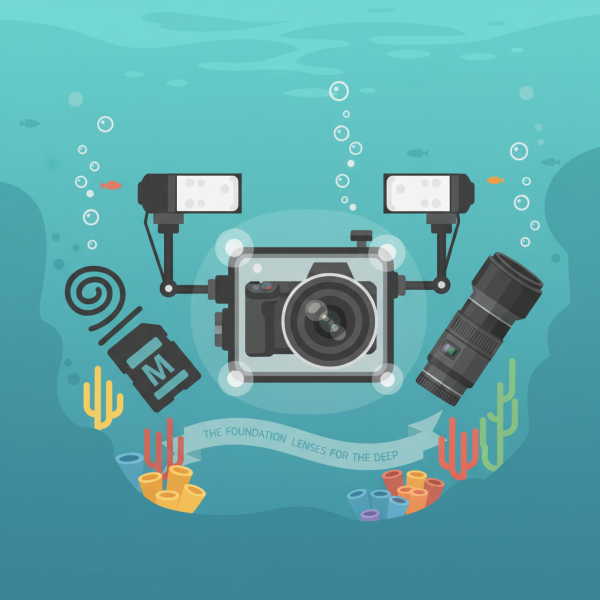
The waterproof housing is arguably the most critical piece of equipment for any underwater photographer. It acts as a protective shell, shielding your camera from water pressure, salt, and potential impacts. Housings are custom-built for specific camera models, making compatibility a key consideration. Investing in a high-quality housing is non-negotiable, as a failure here means catastrophic damage to your camera.
There are generally two main types of housings: plastic/polycarbonate and aluminum. Polycarbonate housings are often lighter and more affordable, making them excellent for beginners or those not diving to extreme depths. Aluminum housings, while heavier and pricier, offer superior durability, better heat dissipation for camera electronics, and can typically withstand greater depths and harsher conditions.
Key features to look for in a good housing include:
- Depth Rating: Ensure it exceeds your planned maximum diving depth.
- Ergonomics: Easy access to camera controls and comfortable handling underwater are vital.
- Port System: The housing must accommodate various lens ports (flat, dome) for different lenses.
- Leak Detection System: An audible or visual alarm can alert you to a potential leak before it causes significant damage.
- Accessory Mounts: For lights, strobes, and external monitors.
Choosing Your Camera Body
While the housing protects, the camera body captures. Your choice of camera will influence image quality, control, and budget. Many underwater photographers opt for mirrorless interchangeable-lens cameras (MILCs) or DSLRs due to their large sensors, excellent low-light performance, and lens versatility. Compact cameras, while simpler and less expensive, often offer fewer manual controls and smaller sensors, limiting their creative potential in challenging underwater light.
Consider the following when selecting a camera body:
- Sensor Size: Larger sensors (APS-C, Full-Frame) generally provide better image quality, dynamic range, and low-light performance, which is crucial in often dimly lit underwater environments.
- Autofocus System: A fast and accurate autofocus system is essential for capturing quick-moving marine subjects. Look for cameras with advanced autofocus tracking capabilities.
- Video Capabilities: If you plan to shoot video, consider frame rates, resolution (4K, 8K), and stabilization features.
- Battery Life: Longer battery life is beneficial, as changing batteries underwater is not an option.
- Manual Controls: Easy access to manual settings (aperture, shutter speed, ISO) is critical for creative control.
It is often recommended to choose a camera model that has strong third-party housing support, offering more options and potentially better value for your investment.
Lenses for the Deep
Lenses are your camera's "eyes" and profoundly impact the type of shots you can achieve. The underwater environment distorts light and magnifies subjects, making specific lens choices critical. You'll generally need different lenses for wide-angle scenes versus macro close-ups.
For capturing expansive reef scenes, wrecks, or large marine animals, wide-angle lenses are indispensable. Rectilinear wide-angle lenses minimize distortion, while fisheye lenses offer an even wider field of view but introduce barrel distortion. These pair best with dome ports on your housing.
Macro lenses, on the other hand, are designed for capturing tiny creatures and intricate details. They allow for extreme close-ups, revealing the hidden beauty of nudibranchs, seahorses, and coral polyps. These lenses typically require a flat port on your housing. For versatility, some photographers use "wet lenses" – external lenses that can be attached and removed underwater, converting a standard lens into a macro or wide-angle option.
Memory Cards: Capture Every Moment
You can't swap memory cards underwater, so having sufficient storage and speed is crucial. High-resolution photos and 4K video files consume significant space. Always err on the side of larger capacity cards. Speed is equally important; a fast memory card ensures your camera can write data quickly, preventing buffer slowdowns and allowing for continuous shooting, especially when capturing action shots.
Look for cards with high write speeds, indicated by classes like V30, V60, or V90 for video, or UHS-II for stills. Investing in reputable brands known for reliability is paramount to avoid data loss. Always carry multiple spare cards, pre-formatted and ready to use, so you never miss a shot due to a full card.
Lighting and Accessories
While the prompt focuses on core gear, it's worth briefly mentioning that external lighting is crucial for vibrant underwater photography. Strobes (flashes) are used for still photography to restore lost colors and add dramatic light, while video lights provide continuous illumination for videography. Other useful accessories include buoyancy arms for lights, focus lights, and lanyards for security.
Summary
Mastering underwater photography begins with a meticulous selection of essential gear. This article has guided you through the critical considerations for choosing a robust waterproof housing that safeguards your camera, an appropriate camera body that aligns with your photographic goals, specialized lenses for both wide-angle vistas and intricate macro details, and high-speed, high-capacity memory cards to reliably store your precious captures. Investing wisely in these foundational components ensures you are well-equipped to explore and document the enchanting world beneath the surface, transforming fleeting underwater moments into lasting memories.
Comprehension questions
 Why is a high-quality waterproof housing considered the most critical piece of equipment for underwater photography?What are the key differences between polycarbonate and aluminum waterproof housings, and when might one be preferred over the other?Besides sensor size, what other camera body features are important for underwater photography, and why?Explain the primary uses of wide-angle and macro lenses in underwater photography and which type of housing port each typically requires.
Review Quiz
Next Lesson
Course Contents : Underwater Photography Deep Dive
- >> 2.
 Essential Camera Gear for Underwater Photography