Culinary Craft with Minimal Equipment
- -->> 9. Culinary Craft with Minimal Equipment
What you'll learn
 Elevating Culinary CraftIngenious DIY SmokingBaking Brilliance with Limited GearIngredient and Equipment Hacks
Elevating Your Culinary Craft with Minimal Resources
In the realm of culinary arts, the pursuit of exquisite flavors often conjures images of specialized equipment, elaborate setups, and professional kitchens. However, the true magic of cooking lies not in the tools at hand, but in the ingenuity of the chef. This article delves into advanced techniques and creative hacks for achieving profound flavors through smoking, baking, and other culinary endeavors, all while relying on minimal equipment. We will explore how to transform humble ingredients and basic kitchen items into powerful instruments for flavor maximization, proving that exceptional taste is always within reach, regardless of your current kitchen inventory.
The Art of Flavor Maximization: Beyond Basic Seasoning
Maximizing flavor is a multi-faceted approach that goes beyond simply salting and peppering. It involves understanding how heat, time, and technique interact with ingredients to unlock their full potential. The goal is to create layers of taste, developing depth and complexity that leave a lasting impression.
Consider the foundational elements of flavor: umami, sweetness, acidity, bitterness, and saltiness. Advanced techniques often involve amplifying one or more of these elements or creating a harmonious balance between them. This could mean slow-roasting vegetables to caramelize their sugars, or introducing a touch of acid to brighten a rich dish.
DIY Smoking without a Smoker: Ingenuity on a Budget
Achieving a smoky flavor typically requires a dedicated smoker, but with a few clever hacks, you can impart that distinct aroma and taste using common kitchen items. The principle is simple: trap smoke around your food.
-
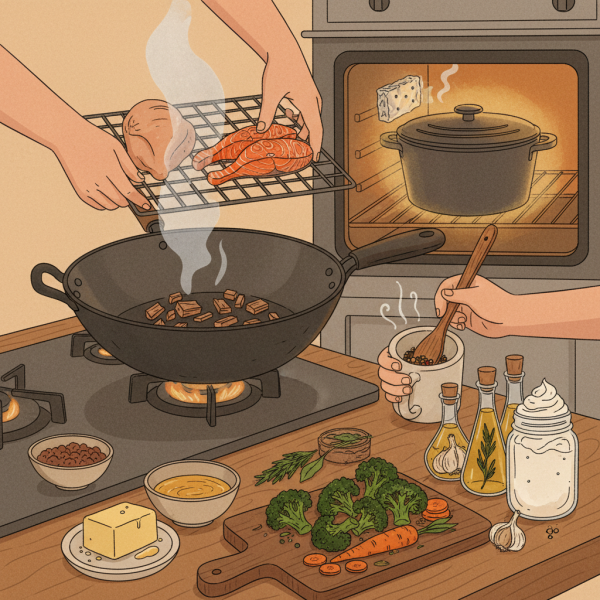
Stovetop Smoking with a Wok: Line the bottom of an old wok or large pot with aluminum foil. Place a handful of wood chips (or even tea leaves, rice, and spices like star anise) on the foil. Place a wire rack over the wood chips, ensuring it doesn't touch. Place your food (e.g., chicken breasts, salmon fillets) on the rack. Cover tightly with a domed lid or another inverted pot to trap the smoke. Heat on medium-high until smoke appears, then reduce heat to low and let it smoke for 10-20 minutes, depending on the intensity desired. Finish cooking the food as usual.
-
Oven Smoking with a Foil Packet: Create a small, tightly sealed foil packet filled with a tablespoon or two of wood chips. Poke a few small holes in the top of the packet to allow smoke to escape. Place this packet directly on the oven rack while roasting or baking. The gentle heat will cause the chips to smolder, imparting a subtle smoky flavor to anything else in the oven. This works particularly well for vegetables or larger cuts of meat.
Remember, proper ventilation is key when experimenting with stovetop smoking to avoid setting off smoke alarms. Always keep a close eye on the process.
Baking Brilliance with Limited Gear: Crafting Masterpieces
Baking can seem daunting without a stand mixer, a full set of baking pans, or a Dutch oven. However, many exceptional baked goods can be created with just a bowl, a spoon, and a simple baking sheet or cast-iron skillet.
For no-knead bread, a heavy pot (like an enamel-coated cast-iron pot or even a heavy-bottomed stainless steel pot with a lid) can perfectly mimic a Dutch oven. The trapped steam inside creates a beautiful crust and a tender crumb. Simply preheat the pot in the oven, carefully transfer your dough, cover, and bake.
Skillet cakes, brownies, and even some fruit crumbles can be baked directly in a cast-iron skillet, providing excellent heat retention and a wonderfully crispy bottom crust. For precise measurements without a scale, remember that volume measurements are often sufficient for many rustic recipes.
To create steam in a conventional oven for crusty breads without special equipment, place a shallow pan of water on the bottom rack when preheating. The steam released will help develop a crispier crust. Alternatively, a spray bottle filled with water can be used to mist the oven walls a few times during the initial baking phase.
Ingredient Hacks for Big Impact: Unlocking Hidden Potential
The ingredients themselves hold immense flavor, and simple hacks can unleash it dramatically.
-
Toasting Spices: Whole spices like cumin seeds, coriander seeds, and even peppercorns release their aromatic oils much more intensely when lightly toasted in a dry pan before grinding. This simple step adds incredible depth to curries, rubs, and marinades.
-
Clarifying Butter: While not strictly a flavor hack, clarifying butter (removing milk solids and water) yields pure butterfat with a higher smoke point and a clean, rich flavor, ideal for sautéing or making sauces without burning.
-
Roasting Vegetables Deeply: Don't just cook vegetables; roast them until they develop a deep, caramelized exterior. This Maillard reaction creates complex, sweet, and savory notes far beyond their raw counterparts. Think roasted broccoli, carrots, or Brussels sprouts.
-
Infused Oils and Vinegars: Steep herbs, garlic, chili flakes, or citrus peel in olive oil or vinegar for a week or two. These infused liquids become powerful flavor enhancers for dressings, marinades, or finishing dishes.
Creative Equipment Alternatives: Everyday Items, Extraordinary Results
Thinking outside the box about your kitchen tools can open up a world of possibilities. A sturdy ceramic mug can serve as a makeshift mortar and pestle for crushing small amounts of spices. Aluminum foil and parchment paper are invaluable for creating pockets for steaming, roasting, or even forming small baking molds.
A simple vegetable peeler can create elegant ribbons of vegetables for salads or garnishes. A mason jar with a tight lid can be used for shaking vinaigrettes or even churning small batches of whipped cream. The key is to view each item not just for its intended purpose but for its potential functions.
Summary: Mastering Flavor with Resourcefulness
This exploration into advanced culinary techniques with minimal equipment underscores that resourcefulness is a chef's most powerful tool. From creating smoky aromas with a wok to baking artisanal bread in a heavy pot, and enhancing flavors through simple ingredient preparations, the possibilities are vast. By understanding the science behind cooking and embracing creative substitutions, anyone can elevate their dishes from ordinary to extraordinary, proving that gourmet results are achievable without a gourmet kitchen.
Comprehension questions
 What are two specific methods for achieving a smoky flavor without a dedicated smoker, as described in the article?How can a home cook create no-knead bread with a beautiful crust and tender crumb if they do not own a Dutch oven?Identify three ingredient hacks from the article that can significantly enhance flavor and depth in dishes.What core principle does the article emphasize as the most powerful tool for a chef when aiming for extraordinary culinary results?
Review Quiz
Next Lesson

Course Contents : Outdoor Cooking and Campfire Culinary Skills
- >> 9.
 Culinary Craft with Minimal Equipment