Optimizing Your Study Schedule: Effective Time Management Techniques
- -->> 1. Optimizing Your Study Schedule: Effective Time Management Techniques
What you'll learn
 Pomodoro TechniqueTime BlockingStudy Schedule OptimizationProductivity Strategies
Students often feel overwhelmed by a multitude of assignments, deadlines, and personal commitments, leading to stress and reduced productivity. However, by adopting proven time management techniques, you can transform your study habits, reduce anxiety, and significantly enhance your learning outcomes. This article will explore practical strategies such as the Pomodoro Technique and time blocking, offering insights into how you can optimize your study schedule and achieve academic excellence.
Understanding the Importance of Time Management
Effective time management is about working smarter, not harder. It involves consciously planning and controlling how you spend the hours in your day, particularly those dedicated to academic pursuits. The goal is to maximize productivity, minimize distractions, and ensure that all necessary tasks are completed without last-minute panics. When you manage your time well, you create a sense of control over your workload, leading to greater confidence and less stress.
Poor time management, conversely, can lead to procrastination, missed deadlines, rushed work, and ultimately, academic underperformance. It can also spill over into other areas of your life, affecting your well-being and social life. Developing strong time management skills early on can set a positive precedent for your entire academic and professional career.
The Pomodoro Technique: Focused Bursts of Productivity
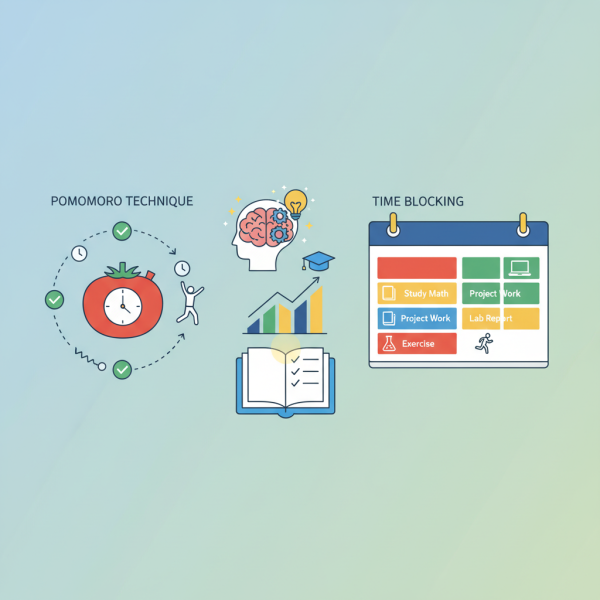
One of the most popular and effective time management methods is the Pomodoro Technique. Developed by Francesco Cirillo in the late 1980s, this technique uses a timer to break down work into focused intervals, traditionally 25 minutes in length, separated by short breaks. Each interval is known as a "Pomodoro," named after the tomato-shaped kitchen timer Cirillo used.
The core principle behind the Pomodoro Technique is to improve focus and combat mental fatigue. By committing to short, intense bursts of work, you can maintain high levels of concentration without feeling overwhelmed by the sheer size of a task. The scheduled breaks prevent burnout and allow your mind to refresh, ready for the next work interval.
How to Implement the Pomodoro Technique:
- Choose a task you need to complete.
- Set a timer for 25 minutes (one Pomodoro).
- Work intensely on the task until the timer rings. Do not switch tasks or get distracted.
- When the timer rings, take a short break (3-5 minutes). Stretch, walk around, or do something relaxing.
- After four Pomodoros, take a longer break (15-30 minutes). This allows for a more significant mental reset.
This method helps to minimize interruptions, as you're encouraged to defer non-urgent tasks or distractions until your next break. It also provides a clear structure to your study sessions, making large projects seem more manageable.
Time Blocking: Structuring Your Day
Time blocking is another powerful technique that involves scheduling specific blocks of time for particular tasks or activities. Instead of just having a to-do list, you assign each item on that list a dedicated slot in your calendar. This approach transforms your schedule into a comprehensive roadmap for your day, week, or even month.
The beauty of time blocking lies in its ability to create a clear structure and enforce discipline. When you allocate a specific time for studying a particular subject, attending a lecture, or even taking a break, you're less likely to procrastinate or get sidetracked. It helps you visualize how your time is being spent and ensures that important tasks don't get overlooked.
Benefits of Time Blocking:
- Provides a realistic overview of what can be achieved in a day.
- Reduces the likelihood of multitasking, leading to deeper focus.
- Helps in setting boundaries between work and personal life.
- Makes it easier to track progress and identify where time is being lost.
- Ensures that essential, non-urgent tasks (like long-term project work) are consistently addressed.
To effectively use time blocking, start by identifying your most important tasks and prioritizing them. Then, open your calendar and assign blocks of time. Be realistic about how long tasks will take and include buffers for unexpected interruptions or tasks that run over. Remember to schedule breaks and personal time too, as these are crucial for sustained productivity and well-being.
Integrating Techniques for an Optimized Study Schedule
While the Pomodoro Technique and time blocking are effective on their own, combining them can create an even more robust and optimized study schedule. For instance, you can use time blocking to designate specific study slots for different subjects or assignments throughout your week. Within those blocked study sessions, you can then apply the Pomodoro Technique to maintain focus and manage your energy effectively.
Imagine blocking out two hours for "Calculus Study" on your calendar. During that two-hour block, you might plan to complete four Pomodoros, focusing on specific problem sets or chapter reviews, with short breaks in between. This layered approach leverages the structural benefits of time blocking with the focused intensity of the Pomodoro Technique.
Other tips for optimizing your schedule include:
- Prioritize: Use methods like the Eisenhower Matrix (urgent/important) to decide what tasks need immediate attention.
- Review and Adjust: Regularly review your schedule and actual time usage. What worked? What didn't? Be flexible and willing to adapt your plan.
- Eliminate Distractions: Turn off notifications, close unnecessary tabs, and find a quiet study environment.
- Schedule Downtime: Rest and relaxation are not luxuries; they are essential for preventing burnout and maintaining mental sharpness.
- Be Realistic: Don't overload your schedule. It's better to plan for fewer tasks and complete them well than to plan too much and feel constantly behind.
By consciously integrating these strategies, you can move from a reactive approach to time management to a proactive one, gaining greater control over your academic journey.
Summary
Effective time management is a critical skill for academic success, reducing stress and enhancing productivity. This article explored two powerful techniques: the Pomodoro Technique, which advocates for focused work intervals followed by short breaks to maintain concentration, and time blocking, which involves scheduling specific periods for tasks to create a structured and disciplined study routine. By combining these methods, such as using Pomodoros within time-blocked study sessions, and incorporating additional tips like prioritization and distraction management, students can significantly optimize their study schedules, achieve their academic goals, and foster overall well-being.
Comprehension questions
 How does time blocking differ from simply having a to-do list, and what are its main benefits for students?Explain how a student could integrate both the Pomodoro Technique and time blocking to create a more effective study schedule.Beyond Pomodoro and time blocking, what other key tips are recommended for optimizing a study schedule and why are they important?
Review Quiz
Next Lesson

Course Contents : College Studies and Building Effective Habits
- >> 1.
 Optimizing Your Study Schedule: Effective Time Management Techniques