Better Note Taking to Elevate Your Learning
- -->> 2. Better Note Taking to Elevate Your Learning
What you'll learn
 Cornell MethodActive EngagementMind MappingStrategic Review
In the academic world, the sheer volume of information presented in lectures and readings can feel overwhelming. Merely listening or reading passively often leads to poor retention and a shallow understanding. This is where note-taking mastery comes into play. Developing efficient note-taking methods isn't just about transcribing information; it's a powerful tool for active learning, deep comprehension, and long-term memory retention. By transforming raw data into organized, digestible insights, you can significantly enhance your educational journey and improve your ability to recall critical information when it matters most.
Why Note-Taking Matters
Effective note-taking serves multiple purposes beyond simply recording facts. It forces you to engage actively with the material, helping you identify key concepts and relationships. The process of summarizing and synthesizing information in your own words deepens your understanding, making the content more meaningful and memorable. Furthermore, well-structured notes become invaluable study aids, providing a personalized resource for review, exam preparation, and future reference. Without a robust note-taking strategy, much of the effort put into attending lectures or reading texts can be lost.
The Foundation: Active Engagement
Before diving into specific methods, it's crucial to understand that the effectiveness of any note-taking technique hinges on active engagement. This means more than just physically writing things down. It involves critical listening in lectures and thoughtful reading of texts. Engage by:
- Pre-reading and Preparation: Skim chapter headings or lecture outlines before the session to get a preview of the topics.
- Asking Questions: Formulate questions as you listen or read. What are the main points? How does this connect to previous knowledge?
- Identifying Key Information: Focus on understanding the core ideas, definitions, examples, and arguments, rather than trying to transcribe everything verbatim.
- Connecting Ideas: Look for relationships, contrasts, and implications between different pieces of information.
Active engagement transforms note-taking from a passive task into an active learning process.
Popular Note-Taking Methods
The Cornell Method
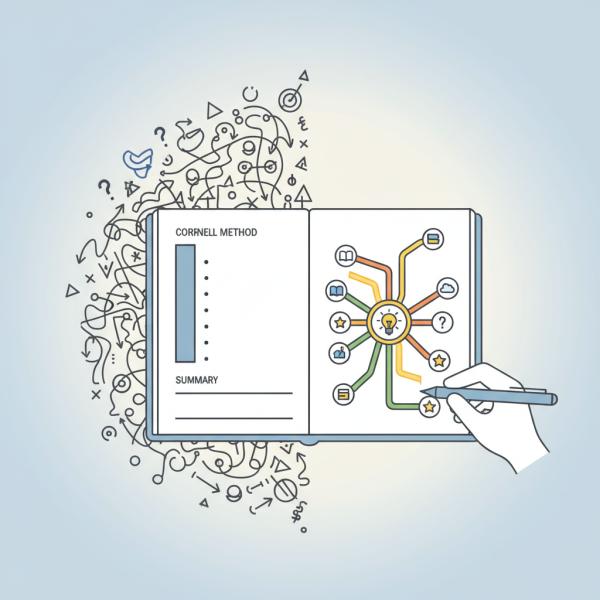
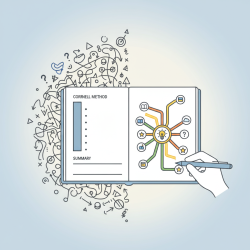
The Cornell Method is a highly structured and effective system for organizing lecture notes and facilitating review. It divides your paper into three main sections: a large main note-taking area (for the lecture/reading), a smaller cue column on the left (for keywords, questions, prompts), and a summary section at the bottom.
- During Lecture/Reading: Use the main section to record primary notes, capturing key ideas, facts, and explanations. Don't worry about perfect sentences; use abbreviations and symbols.
- Immediately After: In the cue column, distill the main notes into keywords, potential test questions, or short prompts that summarize a section of your main notes.
- Later Review: At the bottom, write a concise summary of the entire page of notes in your own words. This synthesis helps consolidate understanding.
The Cornell Method encourages active recall during review, as you can cover the main notes and try to answer the cues or recall the content based on the summary.
Linear Note-Taking with Enhancements
The traditional linear method, simply writing notes sequentially, can be enhanced to be much more effective. While seemingly basic, its strength lies in its flexibility. To maximize its potential:
Use the following techniques:
- Hierarchy and Indentation: Use main headings for major topics, subheadings for supporting ideas, and indentations for details. This creates a visual structure that shows relationships.
- Keywords and Phrases: Focus on capturing essential keywords and short phrases instead of full sentences.
- Symbols and Abbreviations: Develop a personal shorthand system (e.g., "-> for leads to," "w/ for with," "& for and") to speed up note-taking.
- Visual Cues: Underline, circle, or highlight important terms or concepts. Use different colored pens for different categories of information (e.g., definitions, examples, questions).
- Leave White Space: Don't cram your notes. Leave room to add additional thoughts, questions, or clarifications later.
This enhanced linear approach offers a clear, structured way to process information, particularly useful for subjects with a clear sequential flow.
Mind Mapping and Visual Notes
For visual learners or when dealing with complex, interconnected topics, mind mapping is an excellent alternative. It involves drawing a central idea and branching out with related concepts, creating a visual representation of information hierarchy and connections.
Key elements of mind mapping include:
- Central Idea: Start with the main topic in the center of your page.
- Main Branches: Draw thick branches radiating from the center for major sub-topics. Use keywords or short phrases on each branch.
- Sub-Branches: From the main branches, draw thinner sub-branches for details, examples, and supporting information.
- Images and Colors: Incorporate small drawings, symbols, and different colors to make your map more memorable and engaging.
- Connections: Use arrows or lines to show relationships between different branches.
Mind maps encourage free association of ideas and can be incredibly effective for brainstorming, outlining essays, or summarizing an entire lecture visually.
Optimizing Notes for Readings
Taking notes from readings requires a slightly different approach than lectures. While some methods like Cornell can adapt, the key is active reading. Before you even start highlighting or writing, skim the material to get the main idea. Then, as you read, pause regularly to summarize paragraphs or sections in your own words. Focus on the main argument, key evidence, and new vocabulary. Instead of simply copying sentences, synthesize the information. Consider writing questions in the margins of your book or notes that the text answers, or questions that arise from the text. This transforms passive reading into an active dialogue with the material.
The Power of Review
The most brilliant notes are useless if they are never reviewed. Regular and strategic review is the linchpin of note-taking mastery and long-term retention. Implement review sessions:
- Within 24 Hours: Quickly review your notes to solidify immediate recall and fill in any gaps while the information is still fresh.
- Weekly Review: Dedicate time each week to go over all your notes from that period. Use techniques like active recall (e.g., covering notes and trying to explain concepts aloud) or creating flashcards.
- Spaced Repetition: Revisit notes at increasing intervals (e.g., day 1, day 3, week 1, month 1) to move information from short-term to long-term memory.
- Summarize and Synthesize: Beyond just rereading, try to summarize sections without looking at your notes, or create a meta-summary that connects different lecture topics or reading assignments.
Review is not just about recognition; it's about actively retrieving and manipulating the information.
Digital vs. Analog Notes
Both digital and analog (pen and paper) note-taking have their advantages. Digital tools offer searchability, easy organization, and integration with other study resources. Apps like OneNote, Evernote, or Notion allow for multimedia integration and cloud synchronization. However, studies often suggest that analog note-taking, particularly when handwriting, can lead to better retention due due to slower processing, which encourages more active synthesis rather than verbatim transcription. The choice often comes down to personal preference, the nature of the subject matter, and the tools available. Experiment with both to discover what works best for your learning style.
Final Notes
Mastering note-taking is an invaluable skill that transcends academic settings, benefiting professional life and personal development. By embracing active engagement, selecting appropriate methods like the Cornell, enhanced linear, or mind mapping techniques, and committing to consistent, strategic review, you transform note-taking from a chore into a powerful learning engine. The goal isn't just to record information, but to process, understand, and internalize it for lasting knowledge. Invest in your note-taking strategy, and you'll invest in your future success and intellectual growth.
Comprehension questions
 What are the three main sections of the Cornell Method, and how is each used?Name three techniques that can be used to enhance the traditional linear note-taking method.How does active engagement contribute to the effectiveness of any note-taking technique?Why is regular review considered the linchpin of note-taking mastery, and what are some recommended review strategies?
Review Quiz
Next Lesson
Course Contents : College Studies and Building Effective Habits
- >> 2.
 Better Note Taking to Elevate Your Learning